

What is forex sentiment?
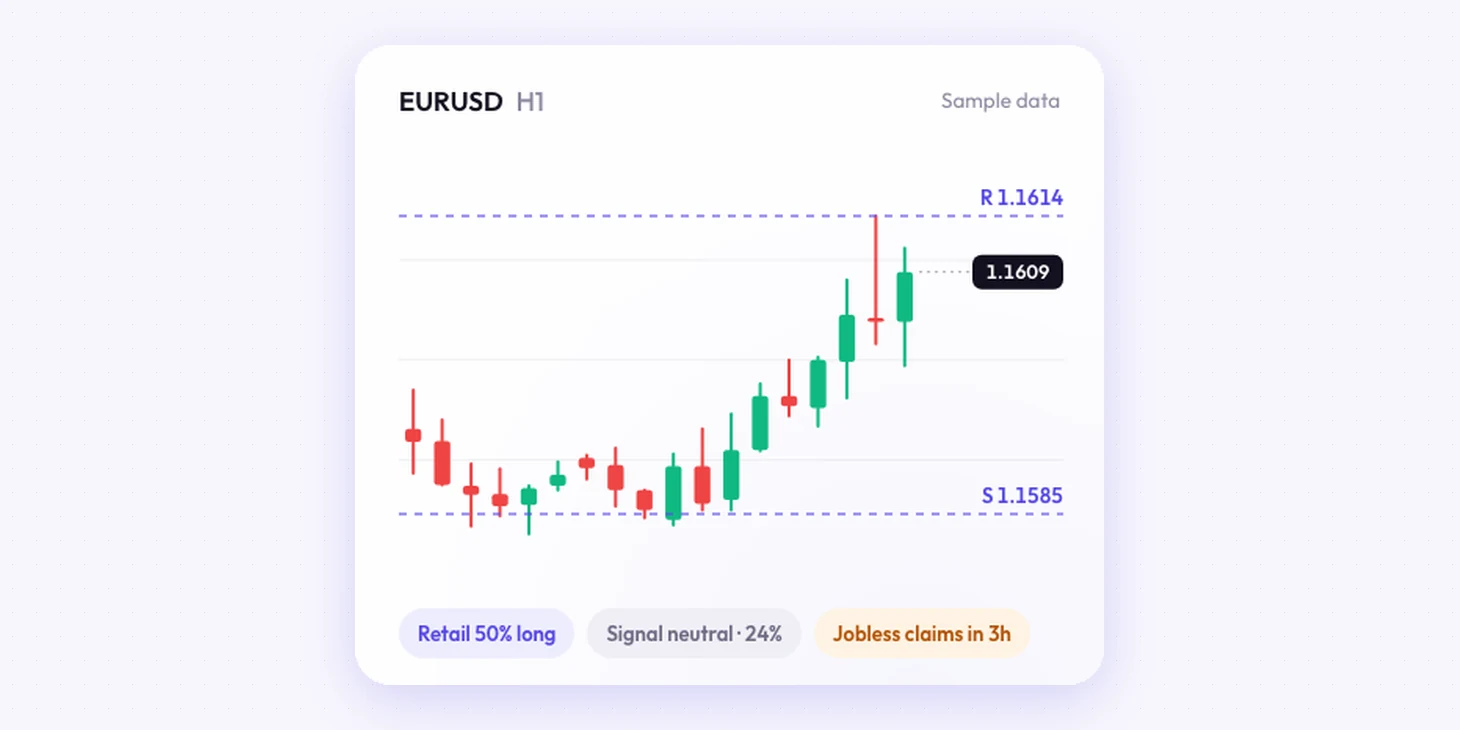
It is the balance between retail traders who are long (buying) and those who are short (selling) on a market, shown as two percentages that add up to 100. A reading of 70% long means the crowd leans heavily toward a rise; on its own, it says nothing about where the price will go.
How often is it updated?
Several times a day on weekdays, on a three-hour cycle. The numbers do not move tick by tick, and over the weekend, with the market closed, they stay at Friday's last reading. Each pair's page shows when its reading was last updated.
Why is retail sentiment read against the crowd?
Retail traders as a group tend to buy after prices fall and sell after they rise, so the crowded side is often the one the market has been moving against. That is why our signal reads sentiment against the crowd. Up to 60% on one side it carries no weight; above that, its weight grows as the crowd becomes more one-sided.
Is sentiment a trading signal on its own?
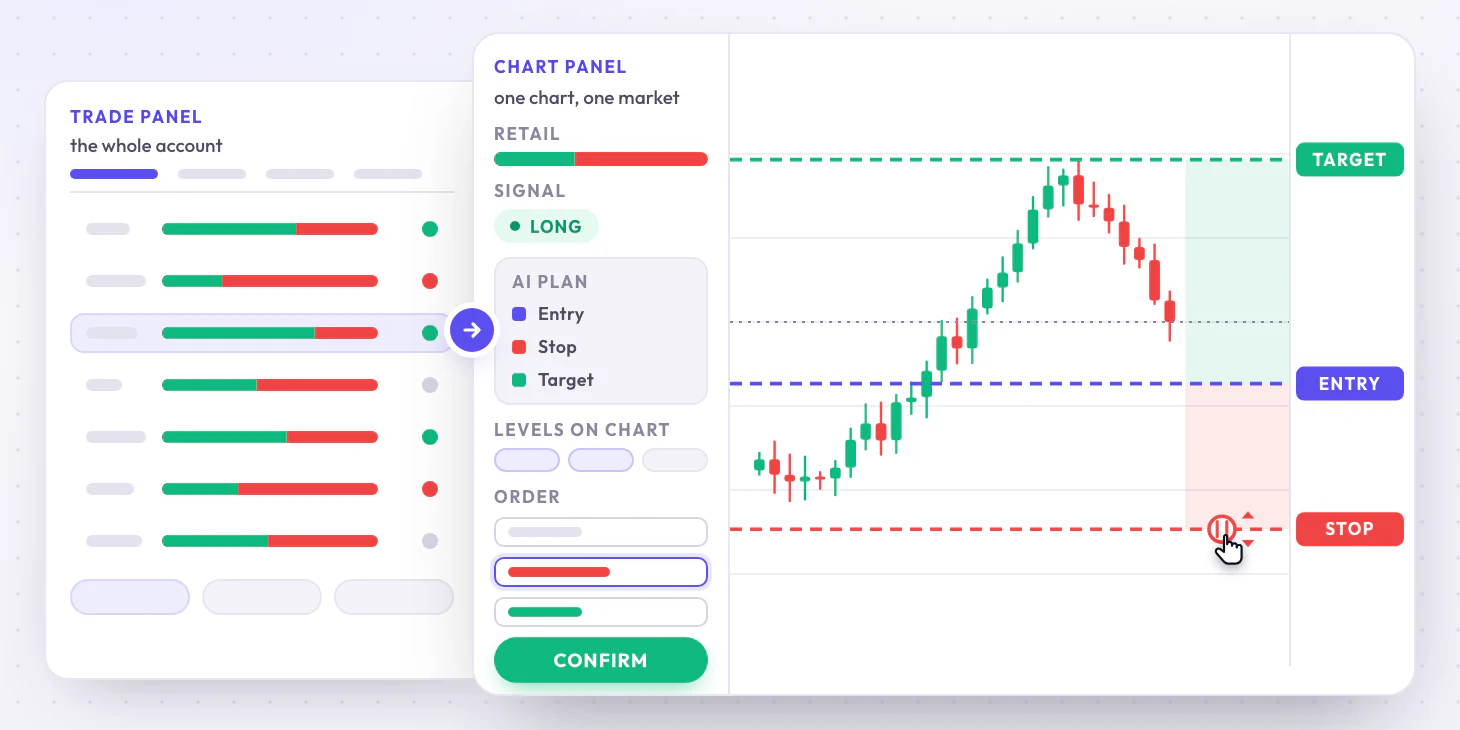
No. It tells you where the crowd is, not when to trade. In our signals it is one of five factors, together with currency strength, chart patterns, support and resistance, and key price zones. Use it alongside your own analysis and risk management.
Which markets are covered?
All 28 pairs between the eight major currencies (EUR, USD, GBP, JPY, CHF, AUD, NZD and CAD), plus gold (XAU/USD). Each one has its own page with the current long/short split, its history over the last 30 days and the price chart.
How to Read Our Data
Each card shows the share of retail traders who are long (green) and short (red). An arrow next to the pair marks a side with 60% or more: up for long, down for short.
60% or more long
The crowd leans to buying. Past 60%, our signals count it against the crowd, as a warning for longs; from 75% the positioning is considered extreme.
60% or more short
The crowd leans to selling. Past 60%, our signals count it against the crowd, as a warning for shorts; from 75% the positioning is considered extreme.
Between 40% and 60%
Positioning is fairly balanced and carries no weight in our signals. It does not mean the market will stay flat.
Note: Sentiment describes the crowd, not the future: past patterns are not guaranteed to repeat. Always combine it with other forms of analysis and proper risk management.